

Two Paths for the Novel, Again?
On Benjamin Kunkel and Paul Lynch and why to write a novel

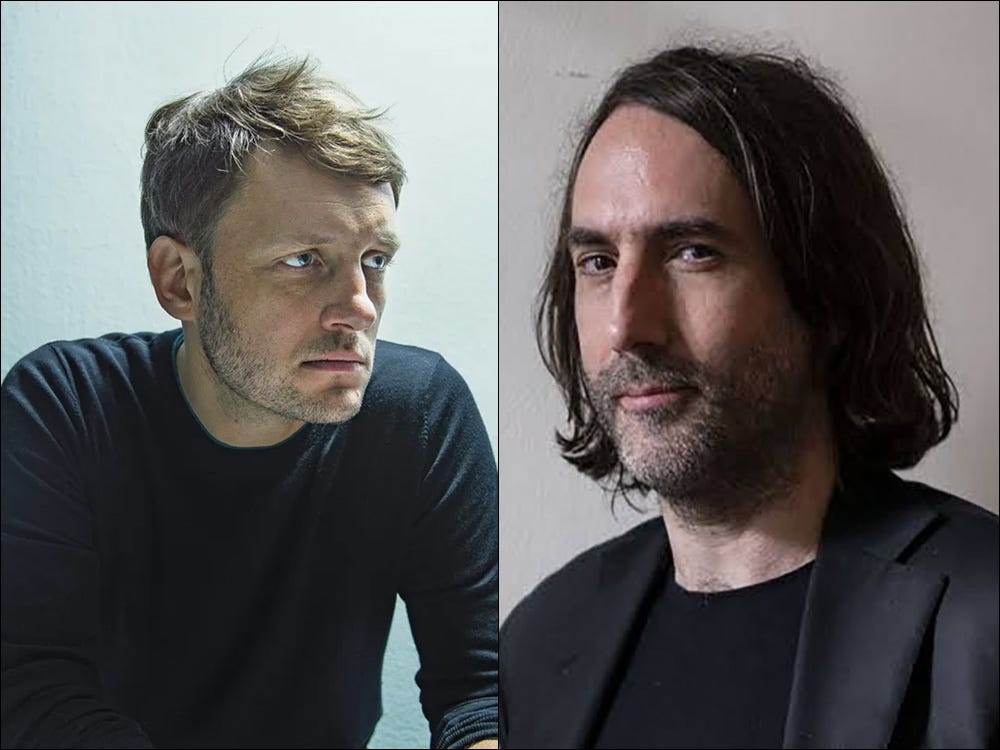
I’m not serious with the title of this post; I’m not really suggesting that we’re going back to that debate. I suppose I should’ve gone with ‘Two Paths Towards the Novel’, because what I’m really interested in isn’t what sort of novel a writer might produce: it’s a divergence of opinion, among writers, over what it is that makes writing a novel worthwhile in the first place.
I’ve been thinking on this since I spent time catching up on some podcasts in my listening queue. Most recently I was bowled over, in a bad way, by Benjamin Kunkel’s concluding comments in a July interview on the Granta podcast. When asked by co-host Leo Robson whether he’d become more comfortable, over time, with the “mainstream” novel as distinct from the stylistically and formally experimental avant-garde, Kunkel said yes and offered the following reflections on why:
(36:19) I do think that the novel has, by comparison to something like music or painting, shows much less in the way of social content. I think there’s a great deal less pressure for formal novelty because there’s the perpetual novelty of the content that is more or less guaranteed by history. The novel is so immersed in history that, if a writer is writing honestly, it’s bound to be doing new things if only by saying new things, because there are new things to be said.
(37:46) I do think that the main modes of the novel haven’t changed a lot in many decades now, and also probably don’t need to. I think the novelist should probably feel more okay about the relatively static nature of the form than a lot of people do.
I suppose some listeners might call that “comfort with the mainstream novel”. I’d call it complacency with received ideas and inherited conventions. And a certain sense of cosy self-satisfaction with the idea that adequacy is a sufficient benchmark for determining whether a novel is worth writing: that a writer needn’t exert themselves by pushing at the novel’s formal boundaries, that the act of writing is still worthwhile if the intended result is nothing more ambitious than a job well done.
In any case, when I heard that from Kunkel, I was thrown back to January, when I heard last year’s Booker Prize-winner, Paul Lynch, interviewed on Across the Pond. Co-host Sam Jordison asked Lynch about the style of his novel Prophet Song, which is narrated in long sentences without paragraph breaks, and Lynch explained it thus:
(22:13) Every book asks for a form that articulates the meaning of the novel. When you sit down to write, you’re searching for the song of the book, you’re searching for the rhythm, but you’re also very quietly coming to grips with the mesh, the way the sentences will sit together, how those sentences will unfold, and how those sentences will convey that meaning. This book began to say to me: there should be no paragraphs. The book began to say: there should be long sentences. And I thought, ‘Okay, I'll go with this’. And I realised that this is a book of inevitability. It’s a book in which, ultimately, it’s a series of equations, the very last line of the book being the QED that I had to prove true. I realised that I was writing a series of equations—this because of this, because of this, because of this—so there’s a deep, implacable logic that starts at the [start of the] book and ends on that very last line. And to capture that sense of inevitability, of being caught up in a sort of tidal pull, one thing that I do is the sense of the long sentence: that feeling of just being carried onwards through time, caught up in a feeling of events, trying to make sense of what’s happening. And the confusion. At the same time, there’s also nowhere to turn. There’s no room for the essayistic in this book. There’s no room for branching out. Everything is associated back to the event and to the meaning. So the book moves without paragraph breaks, because [the protagonist] has nowhere to turn. The breathing room is constrained. The sense of claustrophobia is built into paragraphs. And it just made perfect sense to do that.
And when Jordison reminded Lynch of his Booker Prize acceptance speech, in which he said he’d thought that Prophet Song would doom his career as a novelist, Lynch expressed a sense of doubled surprise: surprise that a book written in such a style could end up winning the prize at all, and surprise that reviewers of the book found the style itself surprising. He positioned himself as a writer who is “playing to the edges of the court, rather than hitting it down the centre”, but said that he was taken aback by reactions along the lines of “Oh my gosh, there’s no paragraphs here! He’s writing in long sentences!”—as if such a thing were an alien phenomenon:
(24:05) Fiction is full of writers pushing the form right now [but] there seems to be a critical lack of awareness [of this] among critics in the UK. … I say this as somebody who was a working critic for a long time. I was in the film world, but damn, I knew everything that was going on at every level. So I’m sort of surprised and taken aback by that. And when I said that I thought I’d doom my career, well, when you take this book as a whole, it’s dark as a dungeon, you know? I mean, it’s an ordeal, but it’s a truthful ordeal. I don’t believe there’s a single sentence in this book that’s not truthful. And that’s really important to me. Everything is always tested. Everything is there for the right reason, the principle of sufficient reason. You get everything there for the reason that it needs to be there and nothing extraneous. And so the book is truthful, and people, when they read it, that sense of truth, I think overwhelms them…
I haven’t read Prophet Song, but thoughtful remarks like these encourage me to take a look. Lynch is essentially talking about what Susan Sontag defined as “style”: “the principle of decision in a work of art”. I’ve glossed that elsewhere as the principle from which rhetorical as well as narrative decisions flow, and around which they cohere. What’s the point of writing a novel, putting in all the work it requires, if not to find such a principle and see what can be made of it? Lynch seems to have asked himself that question and staked his career on a novel that emerged as a result of his aesthetic explorations. Kunkel seems to want to pull off a performance that aims for the merely satisfactory: to publish a novel that does only, but precisely, what it’s expected to do—a novel deserving of a golf clap, at best, while others do the real work of writing.